How Duchenne muscular dystrophy (DMD) affects the body
What is Duchenne?
Duchenne is a progressive disorder of muscle wasting, which causes muscles to get weaker over time. It is caused by a variation in the gene responsible for producing a protein called dystrophin.
Duchenne is estimated to occur in up to 1 in 3500 live male births and is one of the most common forms of muscular dystrophy in children.
How does Duchenne affect muscle?
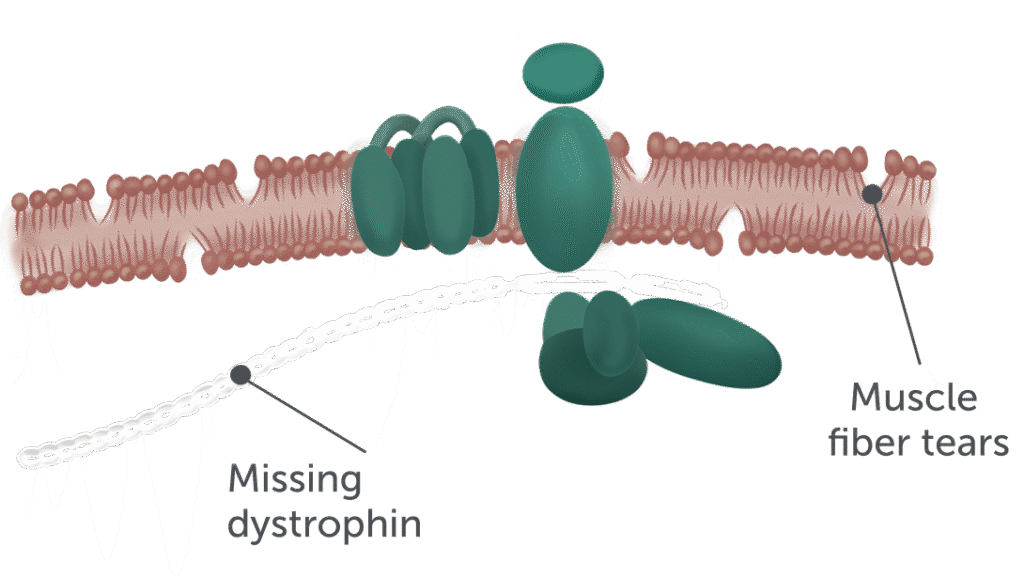
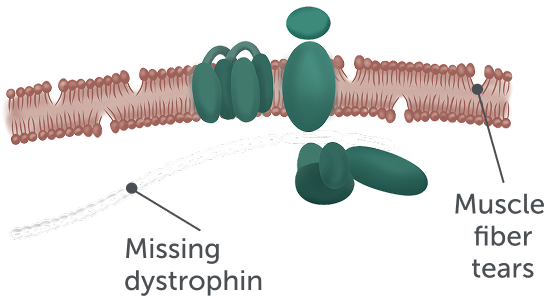
People living with Duchenne do not have enough dystrophin—a protein that stabilizes muscle cells to prevent damage during muscle contraction.
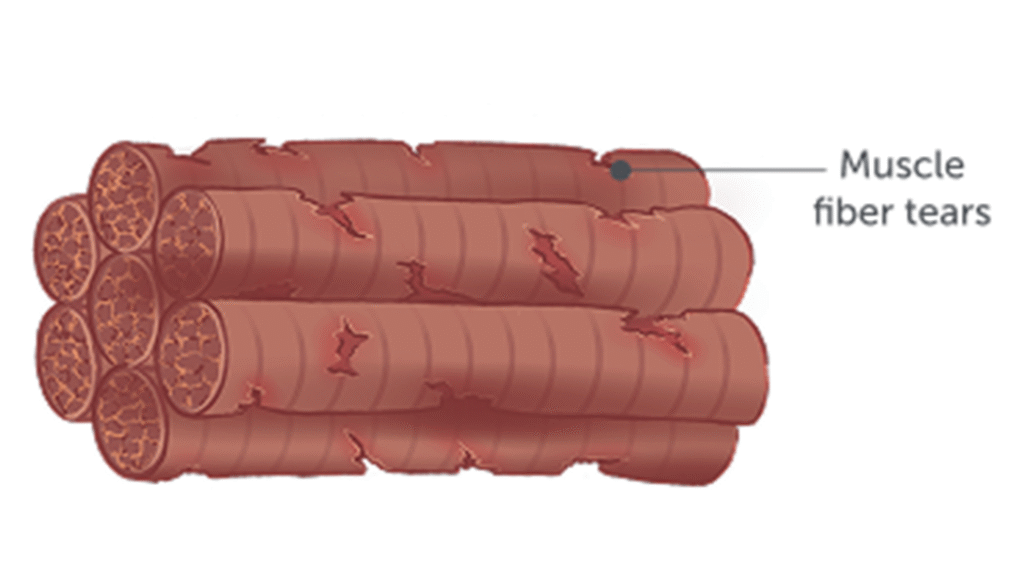
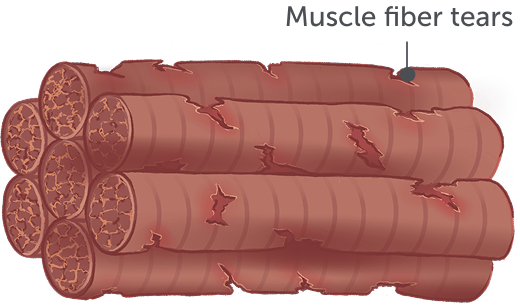
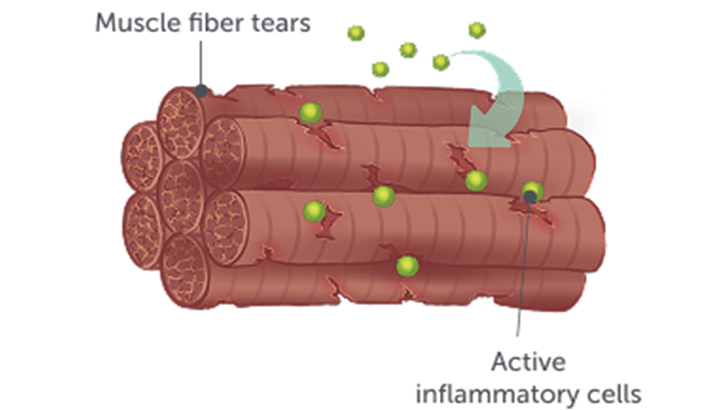
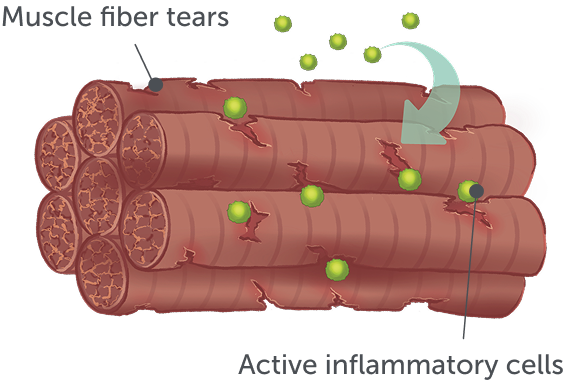
Without dystrophin, muscle contraction causes muscle damage. This damage activates specialized immune cells that then cause ongoing inflammation.
Muscle damage causes ongoing inflammation, where inflammatory cells remain active in damaged muscles. This causes even more muscle damage and muscle weakness over time.
How does Duchenne affect the body?
All people living with Duchenne have muscle damage and muscle weakness that get worse over time. This can show up as delayed milestones, frequent falls, an unsteady walk, slower walking, or difficulty getting up from a lying or sitting position.
As time goes on, other areas of the body may also be affected.
Brain
May face social, emotional, and behavioral challenges and learning difficulties due to the lack of dystrophin in the brain
Heart
May have heart problems because the heart is also a muscle
Bones
Bones can become weaker, making fractures more likely. Bone fractures can limit the ability to move, leading to muscle weakness over time
Breathing muscles
The diaphragm, a muscle that helps control breathing, may eventually be affected. This can lead to the need for assisted breathing
Corticosteroids are a foundational treatment for Duchenne
Expand
Collapse
What is AGAMREE?
AGAMREE is a prescription medicine used to treat Duchenne muscular dystrophy (DMD) in patients 2 years of age and older.
IMPORTANT SAFETY INFORMATION
Patients should not take AGAMREE if they are allergic to vamorolone or any of the inactive ingredients in AGAMREE.
What is the most important information I should know about AGAMREE?
- Do not stop AGAMREE, or change the amount taken, without first checking with your healthcare provider. There may be a need for gradual dose reductions to decrease the risk of adrenal insufficiency crisis, which can be fatal.
- There is an increased risk of infection when taking corticosteroids like AGAMREE. Tell your healthcare provider if the patient has had recent or ongoing infections or has recently received a vaccine. Seek immediate medical advice in the case of fever or other signs of infection. Some infections can be severe, and sometimes fatal. Patients should avoid exposure to chickenpox or measles; alert your healthcare provider immediately if exposure occurs.
- Corticosteroids, including AGAMREE, can cause an increase in blood pressure and water retention. Your healthcare provider may monitor for these increases during treatment.
- There is an increased risk of developing a hole in the stomach or intestines in patients with certain gastrointestinal disorders when taking corticosteroids like AGAMREE.
- Corticosteroids, including AGAMREE, can cause severe behavioral and mood changes. Seek medical attention if behavioral or mood changes develop.
- There is a risk of osteoporosis with prolonged use of corticosteroids like AGAMREE, which can lead to vertebral and long bone fractures.
- Corticosteroids like AGAMREE may cause cataracts or glaucoma. Your healthcare provider should monitor for these conditions if AGAMREE treatment continues for more than 6 weeks.
- Immunizations should be up to date according to immunization guidelines prior to starting therapy with AGAMREE. Live-attenuated or live vaccines should be administered at least 4 to 6 weeks prior to starting AGAMREE. Live-attenuated or live vaccines should not be administered in patients taking AGAMREE.
- Rare instances of severe allergic reaction have occurred in patients receiving corticosteroid therapy.
Before taking AGAMREE, tell your healthcare provider about all medical conditions, including if the patient:
- has decreased liver function.
- is pregnant or planning to become pregnant. AGAMREE can harm an unborn baby.
- is breastfeeding or planning to breastfeed. AGAMREE may appear in breastmilk and could affect a nursing child.
Certain medications can cause an interaction with AGAMREE. Tell your healthcare provider about all the medicines the patient takes, including prescription and over-the-counter medicines, dietary supplements, and herbal products.
What are the possible side effects of AGAMREE?
The most common side effects with AGAMREE include facial puffiness (cushingoid features), psychiatric disorders, vomiting, weight gain, and vitamin D deficiency. These are not all the possible side effects of AGAMREE.
Call your doctor for medical advice about side effects.
Please see full Prescribing Information for additional Important Safety Information.
To report SUSPECTED ADVERSE REACTIONS, contact Catalyst Pharmaceuticals, Inc. at 1-844-347-3277 or FDA at 1-800-FDA-1088 or www.fda.gov/medwatch.
What is AGAMREE?
AGAMREE is a prescription medicine used to treat Duchenne muscular dystrophy (DMD) in patients 2 years of age and older.
IMPORTANT SAFETY INFORMATION
Patients should not take AGAMREE if they are allergic to vamorolone or any of the inactive ingredients in AGAMREE.
What is the most important information I should know about AGAMREE?
- Do not stop AGAMREE, or change the amount taken, without first checking with your healthcare provider. There may be a need for gradual dose reductions to decrease the risk of adrenal insufficiency crisis, which can be fatal.
- There is an increased risk of infection when taking corticosteroids like AGAMREE. Tell your healthcare provider if the patient has had recent or ongoing infections or has recently received a vaccine. Seek immediate medical advice in the case of fever or other signs of infection. Some infections can be severe, and sometimes fatal. Patients should avoid exposure to chickenpox or measles; alert your healthcare provider immediately if exposure occurs.
- Corticosteroids, including AGAMREE, can cause an increase in blood pressure and water retention. Your healthcare provider may monitor for these increases during treatment.
- There is an increased risk of developing a hole in the stomach or intestines in patients with certain gastrointestinal disorders when taking corticosteroids like AGAMREE.
- Corticosteroids, including AGAMREE, can cause severe behavioral and mood changes. Seek medical attention if behavioral or mood changes develop.
- There is a risk of osteoporosis with prolonged use of corticosteroids like AGAMREE, which can lead to vertebral and long bone fractures.
- Corticosteroids like AGAMREE may cause cataracts or glaucoma. Your healthcare provider should monitor for these conditions if AGAMREE treatment continues for more than 6 weeks.
- Immunizations should be up to date according to immunization guidelines prior to starting therapy with AGAMREE. Live-attenuated or live vaccines should be administered at least 4 to 6 weeks prior to starting AGAMREE. Live-attenuated or live vaccines should not be administered in patients taking AGAMREE.
- Rare instances of severe allergic reaction have occurred in patients receiving corticosteroid therapy.
Before taking AGAMREE, tell your healthcare provider about all medical conditions, including if the patient:
- has decreased liver function.
- is pregnant or planning to become pregnant. AGAMREE can harm an unborn baby.
- is breastfeeding or planning to breastfeed. AGAMREE may appear in breastmilk and could affect a nursing child.
Certain medications can cause an interaction with AGAMREE. Tell your healthcare provider about all the medicines the patient takes, including prescription and over-the-counter medicines, dietary supplements, and herbal products.
What are the possible side effects of AGAMREE?
The most common side effects with AGAMREE include facial puffiness (cushingoid features), psychiatric disorders, vomiting, weight gain, and vitamin D deficiency. These are not all the possible side effects of AGAMREE.
Call your doctor for medical advice about side effects.
Please see full Prescribing Information for additional Important Safety Information.
To report SUSPECTED ADVERSE REACTIONS, contact Catalyst Pharmaceuticals, Inc. at 1-844-347-3277 or FDA at 1-800-FDA-1088 or www.fda.gov/medwatch.